A Brief History of the English Language
After completing the 2 week Orthography Review from Literacy Essentials: the Journey from Spelling to Reading, grades 4-6 should introduce the story of spoken English to their students. An interactive format of this presentation is available (for free!) using the link at the bottom of the page.
When I taught 2nd grade, I introduced the word “sword” by reviewing the timeline of English with my students. I then explained to them that in Old English the word was “sweord,” but language changes over time - and so the word became “sword” with a spoken /w/ during the period known as Middle English. Spelling was standardized, and so was the spelling “sword” - but language changes over time - so the /w/ became silent, but it continued to be written. Every time we practiced the word, my students would passionately say, “sweord, sword, sword!” The result? They never forgot to write the silent W.
By introducing this timeline at the beginning of the year, you are providing students with a framework within which to have these conversations throughout the year. The story of English, and thus the story of words and their spelling, is a powerful tool in supporting students’ understanding of the English code.
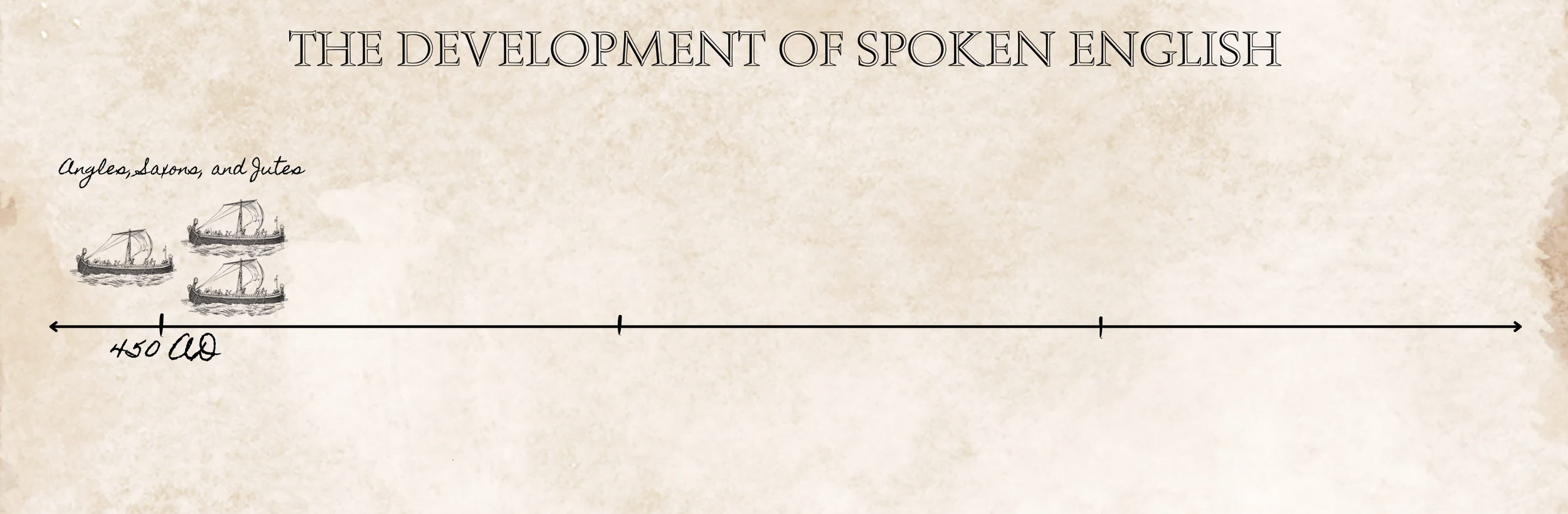
Around 450 AD, the Angles, Saxons, and Jutes brought their germanic language with them to the British Isles, which developed into what we now call Old English (or Anglo Saxon or Native English).
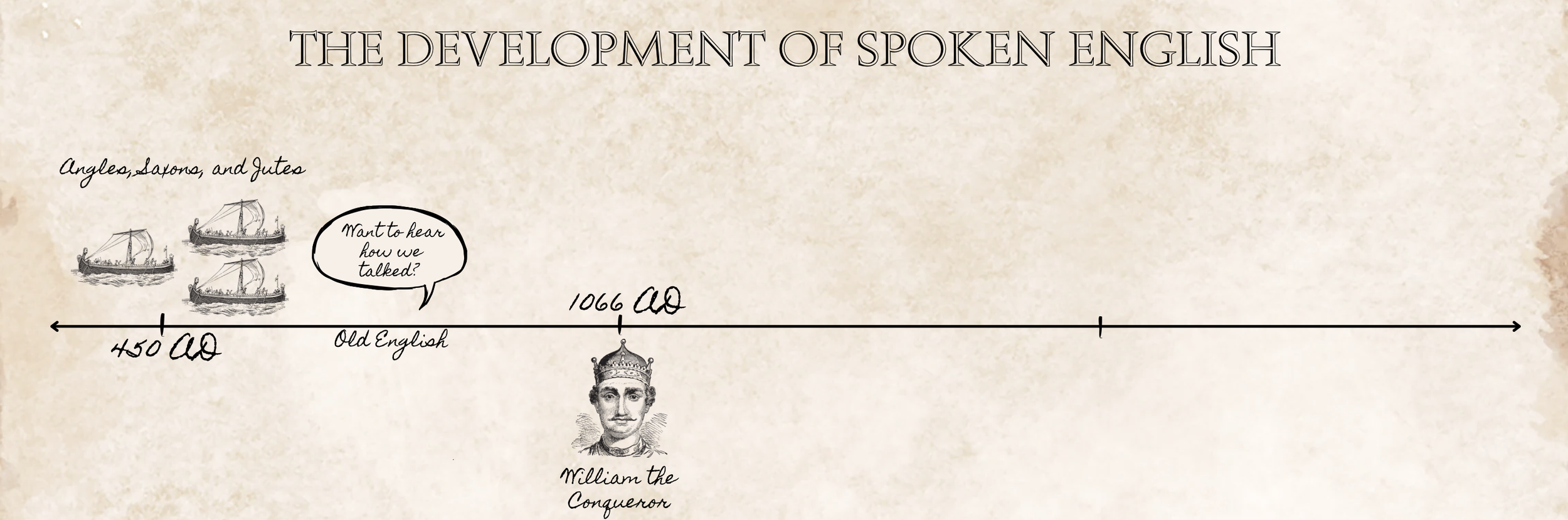
In 1066 AD, William the Conqueror invaded the British Isles and brought with him his language - Old French. During the 400 years the French reigned, Old French had a considerable impact on both spoken and written English, influencing vocabulary and spelling patterns. These changes transitioned us to Middle English.
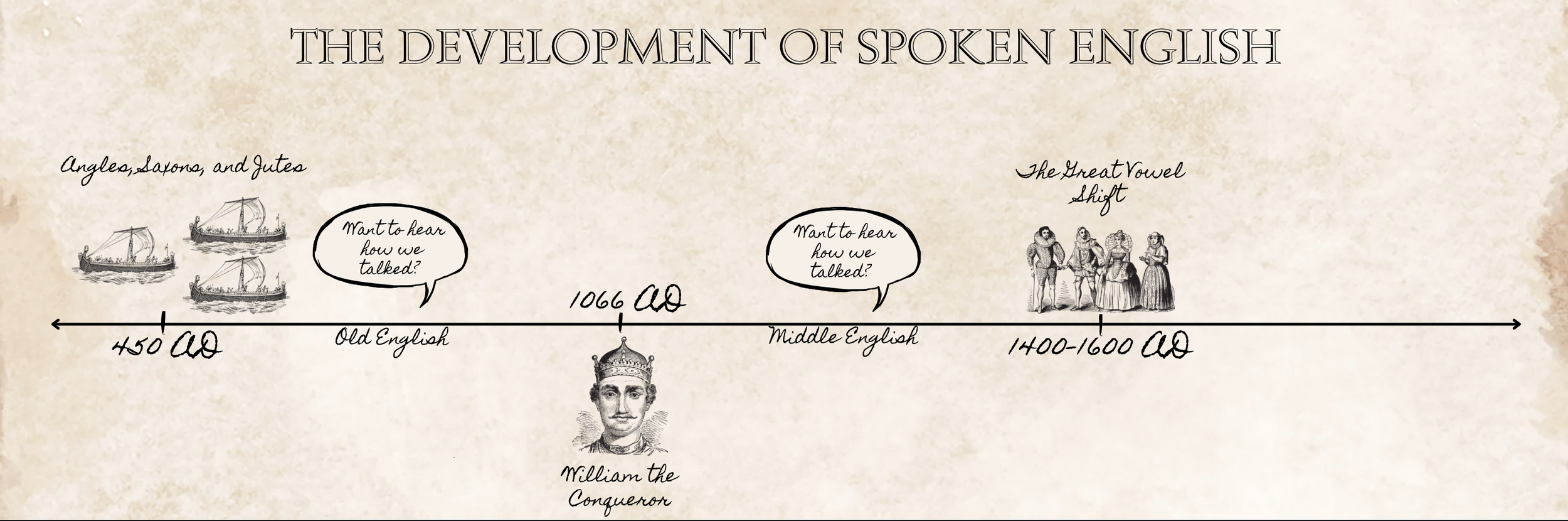
During the 1400’s to 1600’s the Great Vowel Shift occurred, a period of time in which a number of vowels changed their pronunciation so drastically that the change developed into what we now call Modern English.
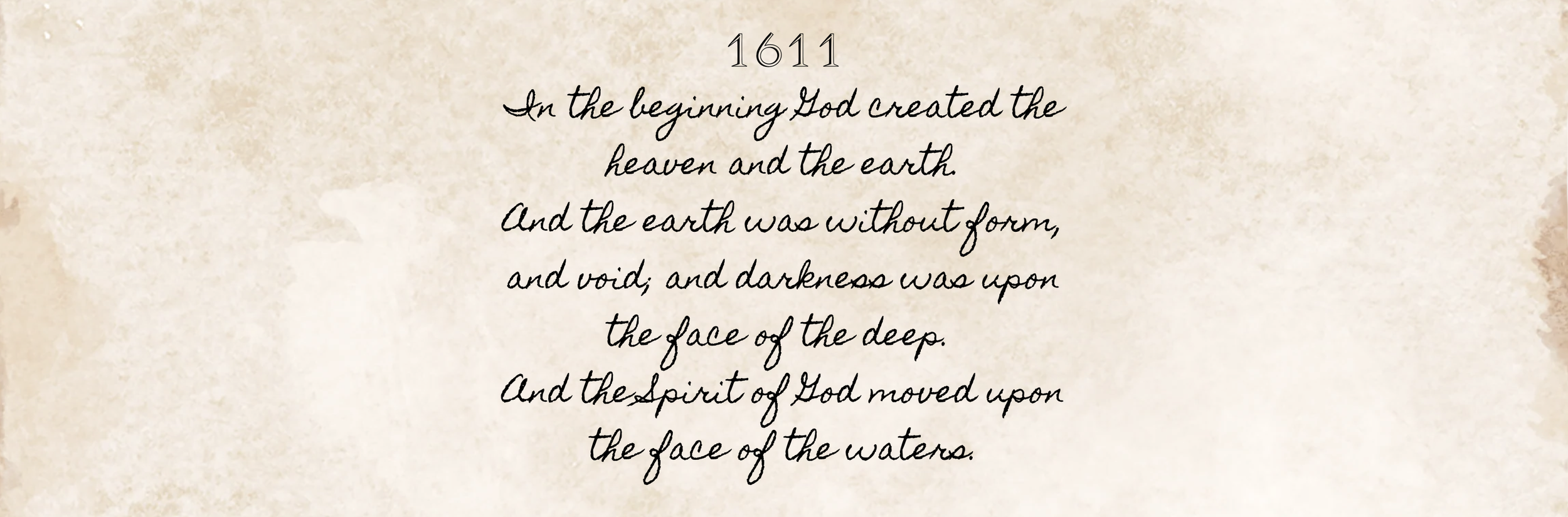
The passage above is from the King James Bible, which was published in 1611 AD. The Old English and Middle English audio clips listened to above are the same text provided here - Genesis 1:1-2.
You may have guessed it - he spoke modern English! Often we hear Shakespearean English referred to as “old English,” but it’s not truly - it is modern, and it is not so different from the English you and I speak today. However, language changes over time - so in the 400 years or so that have gone by, there are noticeable changes in the language - but it is still a form of English we can comprehend. Often we need a bit of support with vocabulary, reading iambic pentameter with proper phrasing, and the extensive figurative language William Shakespeare wielded so artfully.
For example, in this clip from Hamlet, students will need to understand the extended metaphor about a pipe that Hamlet uses to communicate that he cannot be manipulated. Not only would they need to understand the entire speech is a metaphor, but they would also need to know the parts of a pipe - “frets” and “stops” - vocabulary and content knowledge that is simple to understand, yet necessary to have.
I share this with my students so that Shakespeare does not feel so overwhelming. I share it with their parents for the same reason. When we can name what makes a thing difficult, it’s easier to systematically support our students, rather than adopting the common attitude that Shakespeare is too challenging.